Cherokee Indian History

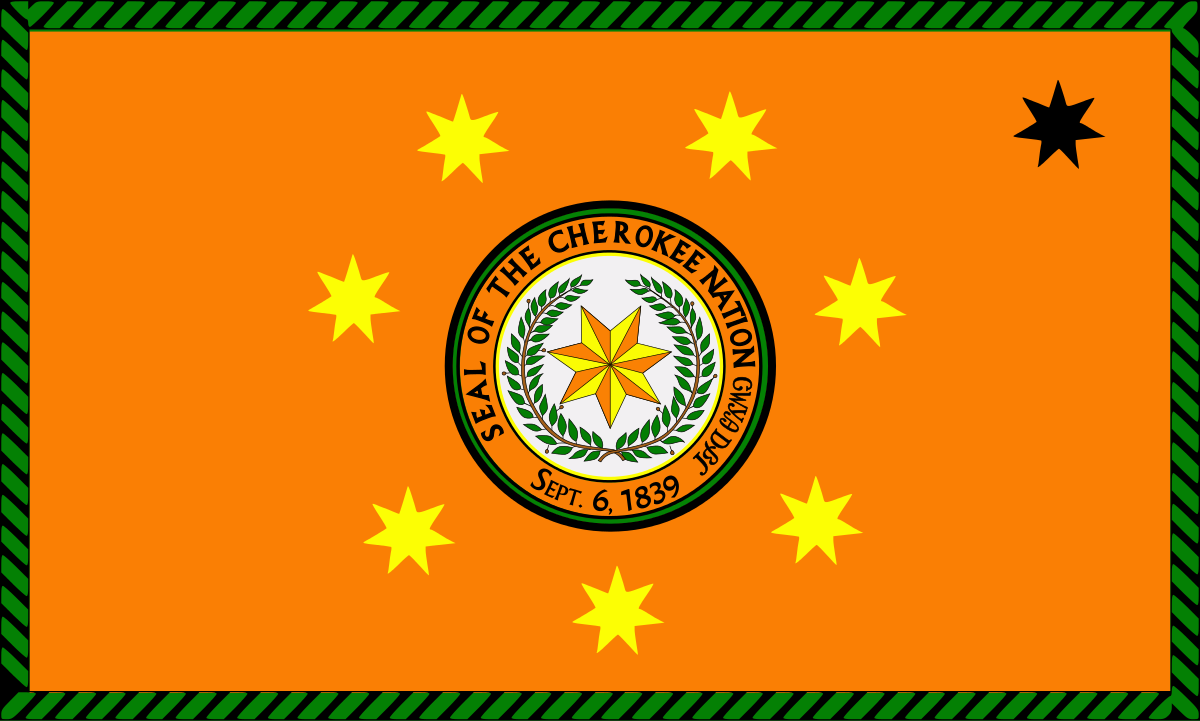
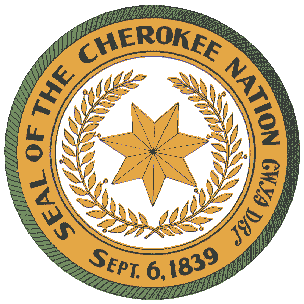
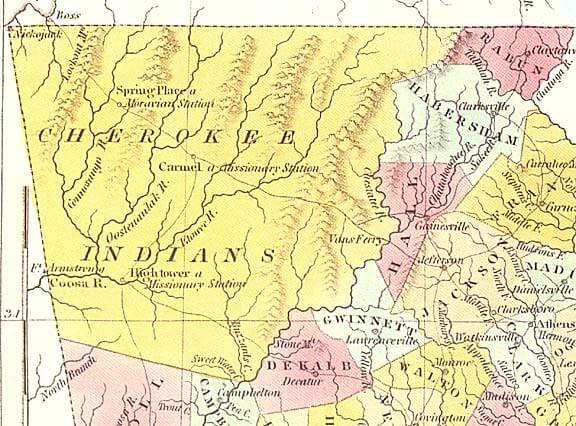
The Cherokee Nation, also known as the Cherokee Nation of Oklahoma, is the largest of three Cherokee federally recognized tribes in the United States. It was established in the 20th century and includes people descended from members of the Old Cherokee Nation who relocated from the Southeast due to increasing pressure to Indian Territory and Cherokee who were forced to relocate on the Trail of Tears. The tribe also includes descendants of Cherokee Freedmen and Natchez Nation. Over 299,862 people are enrolled in the Cherokee Nation, with 189,228 living within the state of Oklahoma. According to Larry Echo Hawk (in 2009), head of the Bureau of Indian Affairs (BIA), the current Cherokee Nation is not the historical Cherokee tribe but instead a "successor in interest." Headquartered in Tahlequah, Oklahoma, the Cherokee Nation has a tribal jurisdictional area spanning 14 counties in the northeastern corner of Oklahoma. These are Adair, Cherokee, Craig, Delaware, Mayes, McIntosh, Muskogee, Nowata, Ottawa, Rogers, Sequoyah, Tulsa, Wagoner, and Washington counties. https://en.wikipedia.org/wiki/Cherokee_Nation 


There are many ways children can express their creativity in the Cherokee Indian culture. They can make corn husk dolls, create beaded crafts like jewelry and accessories, they can make musical instruments, or they can invent their own dance to act out a favorite poem or book. I have included instructions and pictures for one of my favorites: Paper Machet Rattles. We viewed a Powerpoint about the rattles used in Native American ceremonies.  The students made their own rattle which could be used for music and dancing.  We were not trying to copy the rattles, but use them for inspiration. 

Here are the steps:
1.  First, tape a paint stick to the inside of a paper plate.

2. Put beans on the plate.


Here are the steps:
1.  First, tape a paint stick to the inside of a paper plate.

2.  Put beans on the plate.

3.  Tape another plate on top.

4.  Use brown kraft paper to paper mache on top of the rattle.  Make sure everything is really secure and taped well, so no beans can escape.  (I wish I had taken more pictures of the progress of these.

5.  Paint the wooden paint stick.

6.  Cut out a construction paper circle to fit on the top of the rattle.  Draw symbols (Native American or your own) on the paper using black marker and construction paper crayons).  Hot glue the paper to the rattle.

7.  Finally, tie on yarn, raffia, beads and feathers for added decoration.
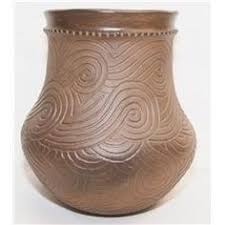

There is a rare spiritual quality to Cherokee art that evokes a sense of sacred traditions. You won’t find Bedazzlers or pictures of Warhol’s Campbell’s Soup cans here. As you run your fingers over the warp and weft of the baskets that combine unique twill variations, you remember these traditional patterns have ornamented these fibrous vessels throughout Cherokee history. Weaponry, pipes, and pottery may draw you in, or colorful beadwork, dolls, and weavings. Not only is Cherokee art known for its beauty and detail—much of it is also useful. From catching fish and storing grain to hunting and traditional ritual, the arts and crafts you’ll find here have been integral to the Cherokee way of life since historic times. http://visitcherokeenc.com/play/art/

Clay Pots: The Cherokee dug clay. They used the clay to make handmade pots. While the clay was still wet, they decorated the pots with designs made with sticks and stones. Then pots were baked in the fire to give them strength. They used clay pots as cooking utensils, liquid holders, and planters. Planters were placed near their homes and filled with flowers, spices, and food items. No tribe used a potter's wheel. Everything was shaped by hand.

https://nativeamericans.mrdonn.org/southeast/cherokee/arts.html

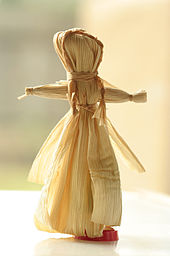
Corn Husk Dolls: Corn husk dolls do not have faces, and there are a number of traditional explanations for this. One legend is that the Spirit of Corn, one of the Three Sisters made a doll out of her husks to entertain children. The doll had a beautiful face, and began to spend less time with children and more time contemplating her own loveliness. As a result of her vanity, the doll's face was taken away.

https://en.wikipedia.org/wiki/Corn_husk_doll

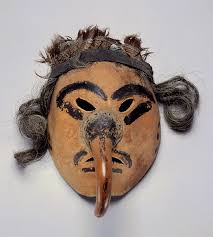
Masks & Rattles: In olden days, only the men made masks. Cherokee men carved ferocious masks from wood. They painted them. Sometimes they added fur decorations. Warriors used these scary masks to make fun of their enemies. Before a battle, the warriors would dance around wearing scary masks, and laugh and laugh. This type of mask was called a Booger Mask.

https://nativeamericans.mrdonn.org/southeast/cherokee/arts.html


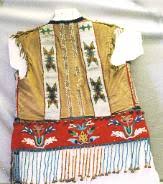
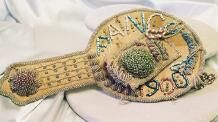
Faced with continuing loss of their lands and the decline of hunting and fishing in the 19th century, the Cherokee Indian Tribe and their relatives, the Iroquois nations of New York State and Canada, came up with a successful survival strategy: they would sell tourists the
fancy Indian beadwork, wood carvings, and beautiful baskets they had long done for
themselves. Tourists loved their Indian designs.

Cherokee Indian beadwork and basketry existed before recorded history when beads
made from shells and bird bones were used instead of the tiny glass cylinders first
brought to North America by European explorers in the 16th century.

They used the teeth, bones, and claws of wild animals to decorate their clothing. Dried
berries and gray Indian corn were also shaped into beads.

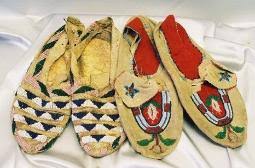
Cherokee Native Americans made moccasins,bags, pincushions, needle cases, sport caps,
picture frames, match holders, clothing and hanging baskets, which were brilliantly stitched
with tiny glass beads by women, using tribal themes but also adapting to the Victorian
tastes of their buyers.


Symbols in Cherokee Indian Beadwork
Symbols enhanced by elaborate scrollwork, was often used to adorn women's leggings.
Other Native American tribal motifs include the sun in stylized form, the celestial tree
as a floral Indian design with fruits, the mythological Native American turtle upon
which the earth was built and other animal clan Indian figures.

http://nativeamerican-art.com/cherokee-art.html

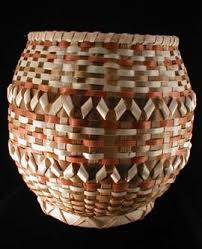
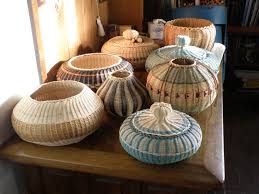
Double Wall Baskets: In olden days, only the women made baskets. Baskets had fancy designs, and were made in a special way, with double weaving, using river cane, so that they were very sturdy. Designs were handed down from mother to daughter. Some baskets were painted as well as dyed. The Cherokee created paints from berry juice, nuts, and roots. Although their baskets added color and gaiety to the appearance of their homes, they were also useful. Baskets were used for just about everything - to gather the crops, to store food, to store belongings, to haul.

https://nativeamericans.mrdonn.org/southeast/cherokee/arts.html


Traditional Cherokee musical instruments

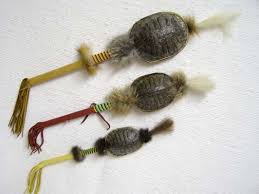
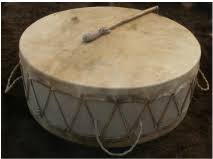
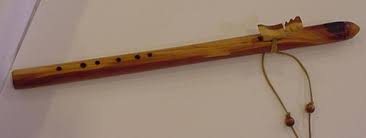
The traditional musical instruments of the Cherokee consist of : The water drum which is a earthen pot or kettle with a skin stretched over the top of it. An inch or so of water or other liquid is placed inside before playing. The River Cane flute, which in 1835 was reported to have been approximately one foot long, and had 6 holes. Trumpets were sometimes made from buffalo horns, and sometimes from long neck gourds or the thigh bone of the crane. Conch shells were used in very early times. Turtle shells are used for ceremonial rattles; a single rattle to be held in the hand for use by men, and turtle shell shackles worn on the legs of women. Sometimes the ceremonial hand rattles are made of gourd, as well.


The Evolution of Cherokee Music

Instruments Played in Cherokee Music

The music of the Cherokee Indians has been influenced by many other cultures and includes a wide variety of instruments. Flutes, drums, and rattles are some of the most ancient. As music in America has evolved so has Cherokee music. Over time Cherokee musical compositions came to include the fiddle, percussion, guitar, mandolin, and more. Cherokee musicians play everything from traditional Native American, to bluegrass, to rock and roll music. In Native American history music is considered sacred and is used for healing and building community connections. Tribes often have musical traditions that have been passed down for generations.

The Importance of Vocals in the Traditional Music of the Cherokee

Cherokee music often includes lyrics and vocals with tribal stories and chanting. The voice is used along with instruments to create a strong rhythmic beat perfect for ritual dancing. Until the 1800’s, when the Cherokee syllabary was invented, Cherokee legends were passed down orally through music, song, and dance. Cherokee Indians sing traditional tribal songs to invoke the power of nature and spirits, to ask for healing or a plentiful harvest, and to show gratitude to the Earth. Songs can be shared as a solo or as a group. Many tribal storytellers, who are often accompanied by music, are members of the Qualla Arts and Crafts Mutual, Inc.

How the Cherokee Use Music and Dance for Ceremonial Purposes

Many native arts and crafts, including music, have been a part of religious and ceremonial traditions. Cherokee instruments were often used for sacred purposes and rituals. Pipes, flutes, drums, rattles, and whistles all had spiritual significance. Ceremonial instruments were made from natural elements. Gourds became rattles; logs became water drums. In today’s modern Cherokee culture, centuries old musical traditions are still honored in public rituals and in the personal spiritual practices of individual tribal members. Cherokee dances also have deep ceremonial significance. Dance songs could feature call and response patterns or short sections of lyrics sung in specific orders. Many native tribes have a history of putting prayers to music.

The following is a link Cherokee Indian song with translation and a couple of traditional song and dance video from YouTube:

https://www.pbslearningmedia.org/resource/natam.arts.dance.cheagle/native-american-culture-cherokee-eagle-dance/

https://www.youtube.com/watch?v=YhcgX1VHsgk

https://www.youtube.com/watch?v=Uc2YpfQUebk